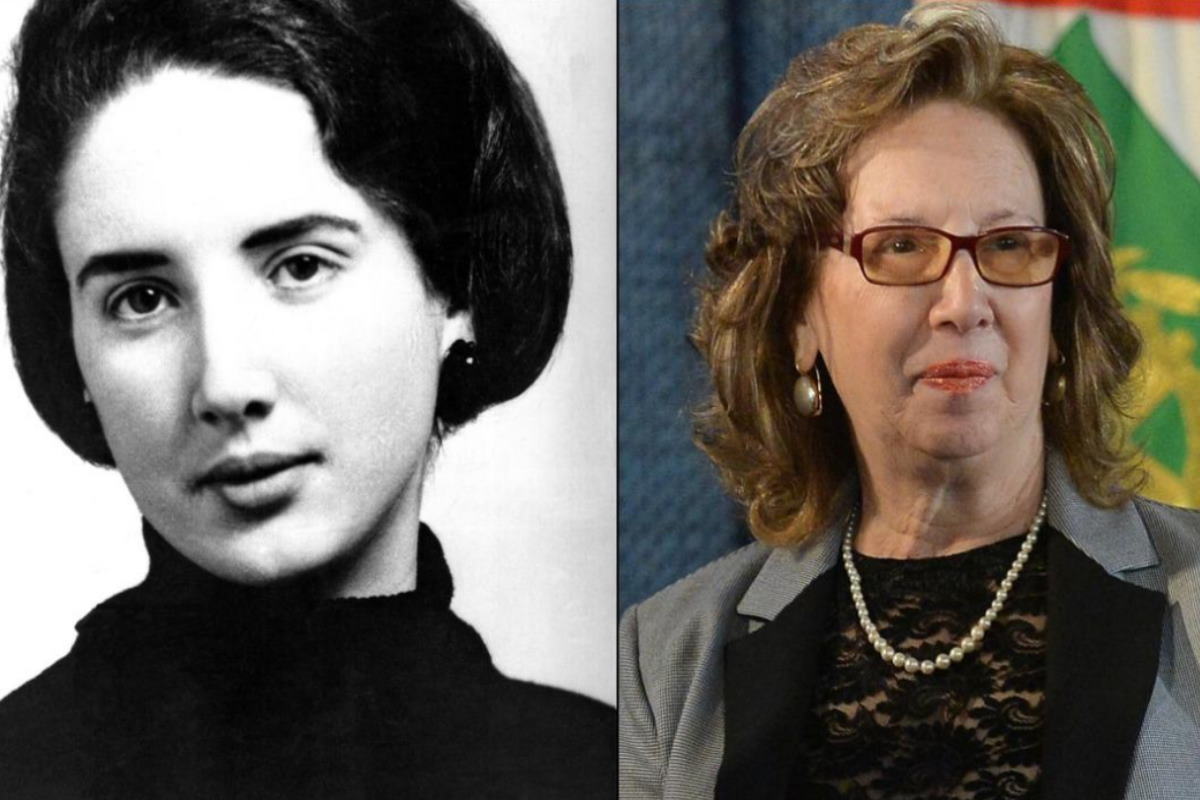
Franca Viola is an Italian woman who became a symbol of courage and resistance against gender-based violence in the 1960s. Her story is particularly noteworthy for the stand she took against a deeply ingrained patriarchal culture.
In 1965, at the age of 17, Franca Viola was kidnapped and raped by a young man (who had connections to the mafia) named Filippo Melodia in the small Sicilian town of Alcamo. Melodia, who was infatuated with Viola, wanted to force her into marriage. However, instead of succumbing to societal pressures and accepting her fate, Viola made a ground-breaking decision: she refused to marry her kidnapper and assailant.
During this time, it’s important to note that rape wasn’t explicitly considered a crime in the same way it is today. Shockingly, the prevailing cultural norm emphasised the idea that a woman’s honour was tied to her virginity, and the violation of this virtue was treated as a crime against the family’s reputation rather than a crime against the woman herself. In a societal practice known as ‘matrimonio riparatore’ or reparative marriage, families often pressured victims to marry their assailants to restore the family’s honour, perpetuating a cycle of silence and impunity.
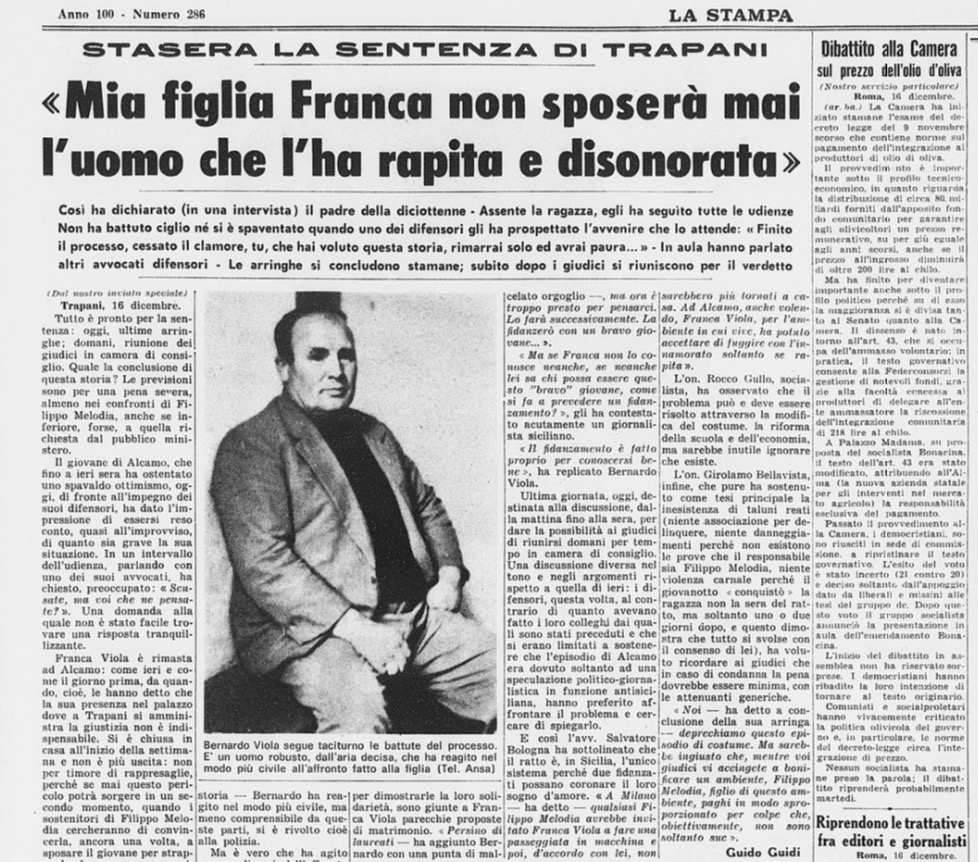
Viola’s defiance was an unprecedented act at a time when such crimes were often overlooked or even condoned by society. In a bold move, she pressed charges against Melodia, taking her case to court. This was a revolutionary act that challenged the prevailing notion that a woman’s honour could only be restored through marriage, even if it resulted from a forced union.
The trial that followed became a national milestone, sparking conversations about women’s rights and the need for legal reforms. In 1966, on December 21st, the court ruled in favour of Franca Viola, finding Filippo Melodia guilty of kidnapping and sexual violence. This landmark decision marked a significant step forward for women’s rights in Italy.
Franca Viola’s courage and determination shattered the silence surrounding gender-based violence and forced the Italian legal system to confront the issue. Her case paved the way for changes in legislation, leading to the criminalisation of kidnapping for the purpose of marriage in Italy. Viola’s story remains an inspiring example of resilience and the power of one individual to challenge societal norms and effect change.

Sources:
Cullen, Niamh. (2016). The case of Franca Viola: Debating Gender, Nation and Modernity in 1960s Italy. Contemporary European History, 25(1), 97–115. https://doi.org/10.1017/S0960777315000491.
Pavesi, Diletta. “Lo Scandaloso Rifiuto Della Sposa. L’ombra Del Matrimonio Riparatore Nel Cinema Italiano Prima e Dopo Il Caso Franca Viola.” Schermi (Milano), vol. 6, no. 11, 2022, pp. 71–91, https://doi.org/10.54103/2532-2486/16158.


No comments:
Post a Comment